About Pressure Screen
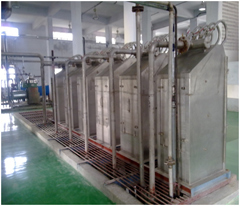
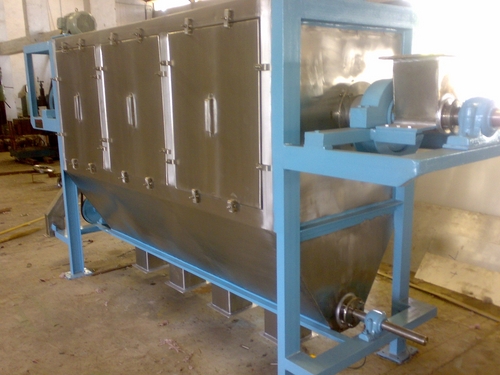
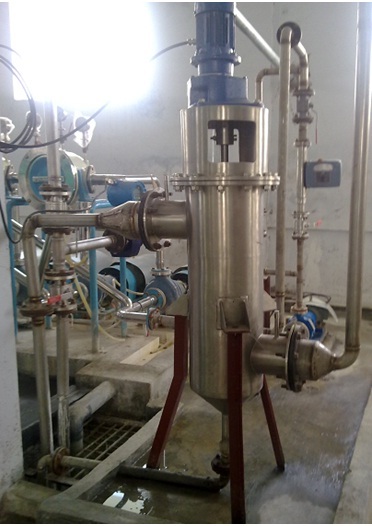
Pressure Screen (DSM 120 Screen Bend)
Our company is engaged in manufacturing and supplying a range of Pressure screen. Single, Double, Triple and quadruple screen boxes
It widest application in starch industry is for Fibre Washing System for the removal of the bounded starch from fiber. We have designed a multistage Fibre Washing System which is proficient in removing both coarse as well as fine fibre in a multiple stage counter current washing 120 bend pressure screen. Our fibre washing system is outstanding for supporting the maximum quality of starch yield and fibre recovery. This range of equipment is endowed with all the advanced facilities in order to meet the requirements and the facilities desired by the clients.
Main features:
 Trust worthy
- Large front & rear doors for easy access to screen
- Less time for screen changing
- Range of feed header & nozzles
- Adequate discharge hoppers for overflow & underflow
- Available in AISI 304 & AISI 316
- EPDM rubber for doors sealing
Advanced Screening for Fiber RecoveryOur Pressure Screen maximizes fiber recovery with its efficient slotted or hole-type basket design, suitable for both primary and secondary pulp screening stages. The well-engineered rotor and premium stainless steel material ensure consistent results, reduce energy costs, and support high-throughput operations essential to modern pulp and paper mills.
Energy Efficiency and Durability CombinedFeaturing an energy-efficient stainless steel rotor and polished construction, this screen minimizes operational costs while remaining highly resistant to wear and corrosion. Its low maintenance requirements and up to 10-year lifespan translate to excellent reliability and value for pulp and paper manufacturers.
Flexible and Automated OperationEquipped with a computerized PLC-based control system, the Pressure Screen supports automatic operation, facilitating user-friendly monitoring and adjustments. Its adaptability to vertical or horizontal installation, alongside capacities from 50 to 500 TPD, allows seamless integration into various plant layouts and processes.
FAQs of Pressure Screen :
Q: How does the Pressure Screen enhance fiber recovery in pulp and paper processes?
A: The Pressure Screen utilizes a slotted or hole-type basket arrangement and a specially designed stainless steel rotor to effectively separate usable fiber from contaminants. This design ensures high screening efficiency and maximizes fiber recovery, supporting better pulp quality and yield.
Q: What are the maintenance requirements and longevity of the Pressure Screen?
A: Maintenance is minimal due to the polished stainless steel construction and robust design. The Pressure Screen is engineered for up to 10 years of operation, with periodic inspections and basic upkeep sufficient to maintain optimal performance.
Q: Where can the Pressure Screen be installed within a pulp and paper plant?
A: The Pressure Screen accommodates both vertical and horizontal installation, providing flexibility for integration into various sections of the pulp preparation processprimarily prior to cleaning, thickening, or final refining stages.
Q: What are the energy efficiency benefits of the Pressure Screens design?
A: The combination of a stainless steel energy-efficient rotor and advanced control systems reduces power consumption (15-75 kW range), lowering operational costs. This makes the Pressure Screen an eco-friendly, cost-effective choice for large-scale production.
Q: When is computerized or automatic operation recommended for the Pressure Screen?
A: Computerized, automatic operationenabled by PLC-based controlis recommended for continuous, high-capacity mills. This feature allows real-time adjustments, consistent product quality, and safer operations, making it ideal for demanding industrial environments.
Q: What processes benefit most from slotted versus hole-type basket designs?
A: Slotted baskets are typically used for coarser screening, effectively removing larger contaminants, while hole-type baskets suit fine screening tasks. The choice depends on the desired level of pulp cleanliness and specific process requirements.

 Send Inquiry



 Send Inquiry

 Send Inquiry


